Thursday, November 29, 2007

Best Buttermilk Biscuits

Several years ago, The Washington Post ran an article in their food section called "Building a Better Biscuit," which my grandmother saved for me, and which I have referred to many times since. The article gives some good suggestions: Don't overwork the dough; to get maximum rise, bake the biscuits soon after they are cut; and use buttermilk, fine sea salt, and a combination of baking powder and baking soda. Light, flaky and buttery, these biscuits are delectable!

The original recipe called for eight tablespoons of shortening, but I, conditioned by my mother, use all butter instead. This recipe can be adapted — I made a cashel blue cheese and chive variation for St. Patrick's Day — and the dough, unbaked, can be frozen and baked straight from the freezer. I prefer to eat these just as they are, maybe with a little butter, but they also make a nice base for poached eggs, Ben's favorite way of eating them.

Also, check out my latest post on Uwishunu.com about the most delicious tacos, made at the Sunday Headhouse Farmers' Market.

Buttermilk Biscuits
Yield = 8 biscuits

2 cups all-purpose flour
2¼ teaspoons baking powder
¼ teaspoon baking soda
¼ teaspoon fine sea salt
2 tablespoons sugar
8 tablespoons cold unsalted butter
¾ cup buttermilk plus more for brushing

Preheat the oven to 400ºF.
In a large bowl, whisk together the flour, baking powder, baking soda, salt and sugar. Cut the butter into the flour mixture and using a fork, mix the butter and flour until the butter has broken into small bits and flakes.
Pour buttermilk into flour mix. Stir with fork just until the dough comes together to form a mass — Do not over-mix. Gently gather the dough in the bowl to bring together, adding an extra tablespoon of buttermilk if necessary. Turn out onto a lightly floured work surface. Pat the dough into a ¾-inch thick circle. Using a two-inch round cutter, cut the dough into eight biscuits. Transfer to an ungreased or parchment-lined baking sheet, spacing the biscuits 2-inches apart.
Brush each biscuit lightly with buttermilk. Sprinkle a pinch of sugar over the top of each. Transfer sheet to the oven, immediately increasing the temperature to 425ºF. Bake the biscuits for 15 to 20 minutes or until golden. Remove from the oven, transfer to a wire rack to cool or serve immediately.

Sunday, November 25, 2007

Pumpkin Dinner Rolls

With Christmas less than a month away, only a few weeks remain to experiment more with pumpkin. Pumpkin ice cream is high on my list; pumpkin tiramisu, however, is falling quickly. It may not, unfortunately, happen this season.

And thanks to a free sample offered at Williams-Sonoma yesterday, I think I'll be making a batch of pumpkin dessert bars very soon. I'm usually not a sucker for those jarred products (butternut squash purée, for example, or roasted garlic tomato sauce) but the bar I sampled, made with a jar of their featured pumpkin butter (Muirhead), was particularly good, and the jars, at half price, became very attractive. The sales woman advised I buy two because no more would arrive this season. So, I did.

These dinner rolls, made simply with a can of Libby's pumpkin purée, actually have nothing to do with the WS pumpkin butter. Last week, looking for a festive recipe for Thanksgiving, however, I searched on Epicurious and found a recipe for "pumpkin nutmeg dinner rolls", which looked pretty good. Just like several of the 35 other reviewers, however, I wasn't crazy about the amount of butter suggested (12 tablespoons), so I omitted it altogether. I also left out the egg, added more salt (as many of the reviewers felt necessary), and added more "pumpkin spice" — cinnamon, cloves, nutmeg, ginger — since many of the reviewers felt the rolls lacked pumpkin flavor. Without butter and eggs, these rolls lack the richness of a classic Parker House Roll, but nonetheless remain moist and flavorful (and far more healthy).

Anyway, I never got around to making these for Thanksgiving, but I have about 20 frozen remaining in my freezer from the batch I experimented with before the holiday. Every night, I wrap one in foil and place it in the oven to thaw. They are delicious, but best the day they are made, pulled apart at the table and served with softened butter.

Pumpkin Dinner Rolls
Yield = 22 to 24

¾ cup milk, room temperature
2 teaspoons instant yeast
¼ cup sugar
15 oz. can pumpkin purée
5 cups all-purpose flour, plus more as needed
1 teaspoon cinnamon
½ teaspoon ground ginger
1/8 teaspoon ground cloves
freshly grated nutmeg to taste
1 tablespoon kosher salt
butter for greasing
1 egg

Place milk, yeast and one teaspoon of the sugar in the bowl of a standing mixer fitted with the dough hook. Let sit 15 minutes. Add remaining ingredients, except for the butter and egg, and mix on low speed for 10 minutes, adding more flour until the dough gathers around the hook and pulls away from the sides of the bowl as the hook rotates. The dough should not stick to the bottom and sides of bowl. Transfer the dough to a greased bowl, cover with plastic wrap and let rise until doubled in bulk, about two hours.

Punch down the dough, and turn out onto a lightly floured work surface. Grease two 9-inch square or circular baking pans. Portion the bread into 22 to 24 small balls (each weighing approximately 2- to 2¼-ounces). Place 10 balls in each pan, leaving space around each to rise. Cover with plastic wrap and let sit for another hour until doubled in bulk.

Preheat the oven to 400ºF. Place pans in oven for 20 minutes. Meanwhile, beat egg with 2 teaspoons water. After the 20 minutes, brush the rolls with the eggwash and return to the oven for another 5 minutes. Remove pans from oven and turn rolls out onto a cooling rack or board. Serve immediately, letting guests pull rolls apart at the table. Serve with softened butter.

Tuesday, November 20, 2007

Mache and Persimmon Salad

I cannot believe it, but today my blog celebrates its one-year birthday. Exactly one year ago today, I wrote about quince membrillo, a sweet paste commonly served with several Spanish cheeses including Manchego, Roncal, Idiazabal and Zamorano. This past week, I introduced two good friends and their family members to membrillo and the tradition of eating membrillo with sheep's milk cheeses. My friends, Emily and James, married in Cyprus July 18, celebrated their marriage stateside this past Sunday in Chapel Hill, and in the days leading up to the festivities, we enjoyed many delectable dinners together commenced with this classic combination.

While in North Carolina, Emily and I spent a good hour one day touring around a gourmet food shop, A Southern Season, where I found among many goodies a large selection of Cypress Grove cheeses (Cypress Grove makes Humbolt Fog). Being vegetarians, James and Emily try to eat cheeses specifically made without rennet, a coagulating enzyme made from the stomach of calves. Many, if not all, of Cypress Grove cheeses are made with a vegetarian rennet, including a yummy sheep's milk cheese called Lamb Chopper, which we savored with the membrillo. We actually enjoyed the fruit paste with all of the cheeses — Brie, Morbier, Tomme de Savoie — we ate this past week, but the Lamb Chopper-membrillo combination proved the best of all.

My week in North Carolina to say the least was memorable. By the end of each day, my face hurt from smiling and laughing so much — I lived with James' family for the week, a family of four funny children, two entertaining parents and two wonderful dogs. We played Scrabble and ping pong, watched Mostly Martha and Grizzly Man, took walks with Molly and Sally (the dogs), and generally just enjoyed the time spent together with good company.

On one of the first nights of my visit, we also enjoyed thin slices of Fuyu persimmons with all of the cheeses. Fuyu persimmons make a nice seasonal addition to many dishes, including salads and paninis. Available from September through December, persimmons peak in November, perfect timing for the Thanksgiving Day feast. If you're sill searching for a first course to prepare for Thursday's meal, try this salad — elegant, seasonal and delectable — a festive addition to the Thanksgiving Day table.

Mache and Persimmon Salad
Serves 4

2 small shallots
2 tablespoons champagne vinegar
2 tablespoons lemon juice
½ teaspoon Dijon mustard
¼ teaspoon sugar
½ teapoon kosher salt
1/3 cup extra-virgin olive oil
2 Fuyu persimmons
4 oz. piece of Parmigiano Reggiano
8 oz. mache
freshly ground pepper

To make the dressing, whisk the shallots, vinegar, lemon juice, mustard, sugar and salt together. Slowly drizzle in the olive oil, whisking constantly to make an emulsified dressing. Set aside.

Cut the ends off each persimmon. With a paring knife, slice off the skin, removing as little flesh as possible. Using a mandoline, cut each persimmon into thin slices. (Alternatively, slice thinly using a sharp knife.) Set aside

Using a peeler or a knife, shave thin long strips off the block of Parmigiano. Set aside.

Place greens in a bowl and toss lightly with the vinaigrette. Divide the slices of persimmon evenly among the plates. Top each with a generous handful of greens. Top with the cheese shavings. Crack pepper over each salad and serve.

Sunday, November 11, 2007

MREs

On November 10, 1775, the Second Continental Congress resolved to create the Continental Marines, a force of two battalions captained by Samuel Nicholas, a Philadelphian. Later that day, Capt. Nicholas set up his recruiting headquarters in Tun Tavern, today regarded as the birthplace of the United States Marine Corps. (A plaque marking the approximate location of Tun Tavern stands on Front Street between Walnut and Chestnut.)

Since November 10,1925, when the first formal ball took place in Philadelphia, the Marine Corps has celebrated its birthday each year with galas all over the world. All commemorations of the birthday include a reading of Order No. 47, written in 1921 by General John A. LeJeune, summarizing the history, mission and tradition of the Marine Corps. Yesterday marked the 232 birthday of the USMC.

For The Novice, Magic Ready-To-Enjoy
The Bulletin, November 9

Last Saturday, presented with the rare opportunity to help my husband prepare for a weeklong field exercise, I found myself “fieldstripping” MREs (Meals, Ready-to-Eat), the self-contained, individual rations used by the U.S. military. Fieldstripping consists of removing excess wrapping (added weight) and unneeded accessories (such as pepper, sugar, and non-dairy creamer packets), leaving the package filled with the bare necessities: snack bars, chili and beans, and M&Ms, for example.

For my services, I got paid with a package of vegetable manicotti — classic field currency — and a few other MRE components as well. While I’m sure the novelty of eating this astronaut-like food fades quickly, at the moment I’m totally intrigued.

Within seconds of filling a small pouch with a couple of tablespoons of water, the heating unit tucked inside activated, causing the bag to puff like a balloon. Hot air burst through the open end, like steam escaping a whistling teakettle’s lid, making the plastic bag hot — dangerously hot — to touch. A chemical smell, redolent of burning plastic, filled the air as the heater began warming my vegetable manicotti, squeezed inside the pouch as well in its own plastic wrapping. Following the instructions, I positioned the pouch at a slight incline and patiently waited for the magic to happen.

In the meantime, I assembled a little hors d’oeuvre — crackers and peanut butter — and opened a side dish — mango-peach applesauce. I removed the contents of the accessories pouch, setting aside the damp-proof matches, a moist towelette and two pieces of gum, opening the salt and pepper preemptively.

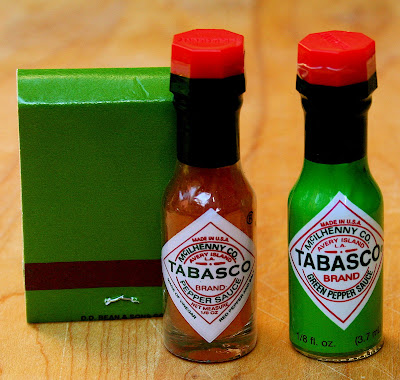
After 10 minutes, I removed the meal pouch and tucked in, spooning out the meal straight from the bag, attempting to keep the experience as authentic as possible. Tomato sauce, the smell reminiscent of a cafeteria lunch buffet, covered a single tube of pasta, the vegetable purée inside textured like pâté. The taste, a touch institutional as well, was fixed by splashing the entire contents of a 1/8-ounce bottle of Tabasco into the pouch.

To wash it all down, I sipped on a vanilla dairy shake, fortified with vitamin D and calcium, packing a whopping 450 calories. And while I had hoped for a packet of peanut M&Ms or Skittles, a very dense carrot pound cake satisfied my sweet tooth.

Truthfully, while I quite enjoyed my meal, I perhaps relished even more the experience, one highlighted by having to use a bottle of Tabasco standing just taller than a book of matches. If I had to subsist on MREs daily, as my husband and fellow Marines had this past week during their patrol exercise, I probably would think otherwise. Moreover, as noted by my husband, I rarely would have the opportunity to enjoy my MRE as a sit-down meal: “Chow is continuous,” he says. “You eat when you can.” Each MRE contains approximately 1,200 calories, and often one MRE, when supplemented by a few grocery store items — beef jerky and Jif-to-go — will last an entire day.

Sometimes too, my husband reminded me, limited time precludes heating. I envisioned eating cold vegetable manicotti — a hard but not impossible act. And then I considered some of the others entrées — cheese omelet with vegetables, beef ravioli, and barbeque pork ribs — a harder idea to swallow. Apparently, hot or cold, “the omelet is the worst thing ever.” But everyone has a favorite, and once the meals are distributed, a fair amount of swapping takes place: Mexican-style corn for refried beans, for example, or pumpkin pound cake for a molasses cookie.

In 1980, the MRE replaced C-rations (combat rations), which consisted of six cans including an entrée, cheese, crackers, candy, an accessory pack, a dessert and four cigarettes. A C-ration contained no heating device, though troops devised “all sorts of ingenious heating mechanisms,” says retired US Army Lieutenant Colonel David Smith. Mr. Smith, a former helicopter pilot, would drain fuel from his helicopter into a can filled with sand to create a sterno-like heater. A tank’s engine could also be used as a heater. When Mr. Smith served, rations were swapped just as they are today, and of course there were favorites back then too — beans and franks, and ham and eggs.

MREs, a vast improvement over C-rations, are remarkable inventions: They have a minimum shelf life of three years, can withstand a parachute drop from 1,250 feet, and can sustain short-term temperature extremes of -60ºF and 120ºF. And MREs continue to improve: To eliminate the need for fieldstripping, scientists have been developing a lighter weight and more calorically dense ration, First Strike Rations, allegedly well received thus far.

I asked my husband if the guys, after being in the field for several days, ever talk about the food they miss.

“All the time,” he said.

I bet they did — homemade bread, spaghetti and meatballs, roast chicken. But I shouldn’t have been so romantic: My husband disclosed the food most craved when out in the field — Five Guys Burgers and Fries. I should have known. I did just learn, after all, that McDonald’s is the only restaurant that consistently exceeds my husband’s expectations.